

ADHD Diagnosis in Ontario
An ADHD diagnosis in Ontario is a formal clinical evaluation that determines whether a person's difficulties with attention, activity level, and impulse control meet the criteria for attention-deficit/hyperactivity disorder set out in the DSM-5-TR. In Ontario, only regulated professionals, such as physicians, psychiatrists, nurse practitioners, and psychologists, are legally permitted to make and communicate this diagnosis.
At Cedarway Therapy, our registered psychologists assess children, teenagers, and adults for ADHD using the same evidence-based standards recognised across Canada. Whether you have wondered about ADHD for years or a teacher recently raised a concern about your child, a clear, accurate assessment is the first step toward understanding what is happening and what will actually help. We offer assessments in person at our Oakville clinic and virtually across Ontario, in a warm, culturally responsive, and non-judgmental setting.
What is ADHD?
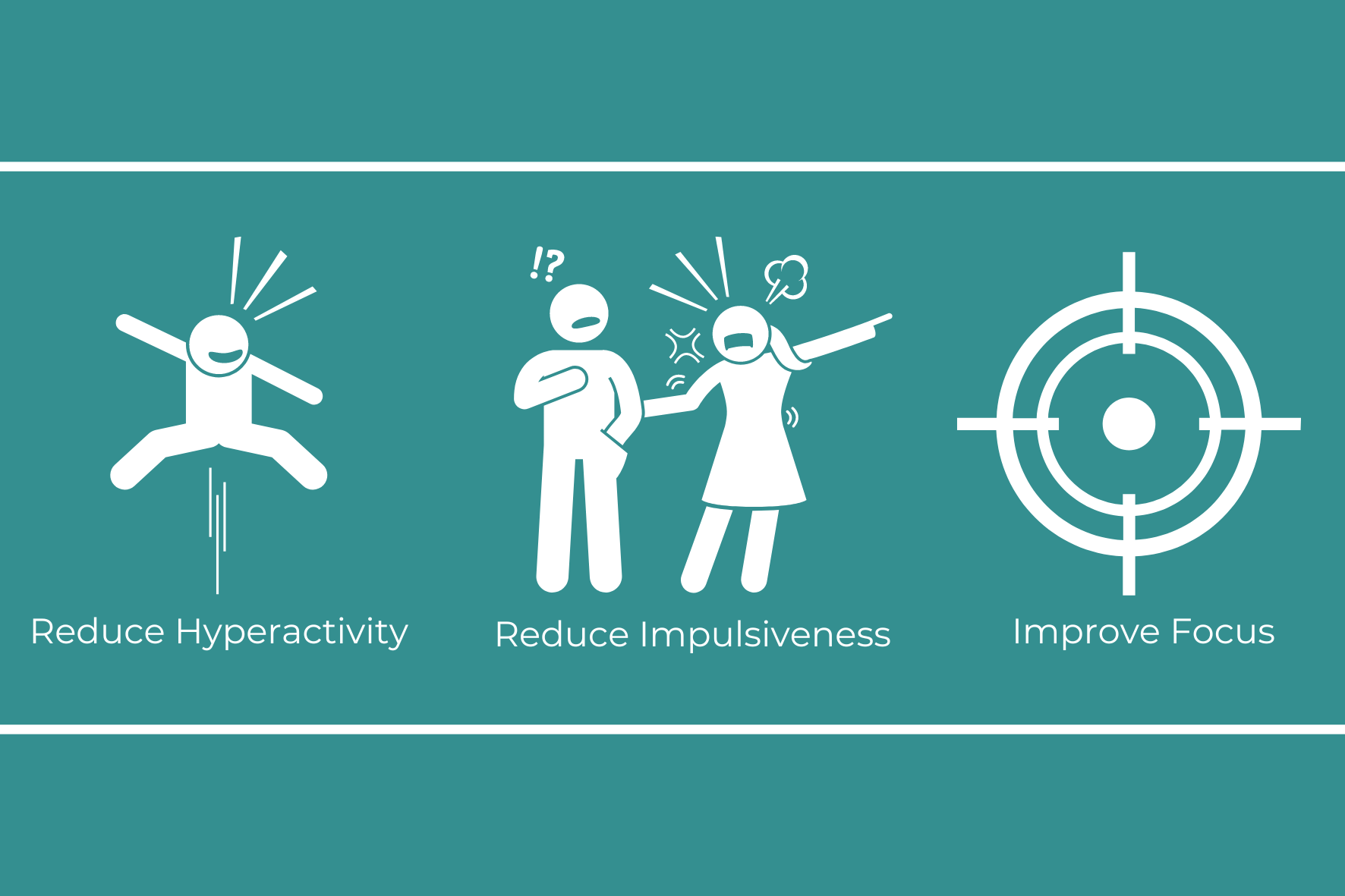
Attention-deficit/hyperactivity disorder is a neurodevelopmental condition that affects how the brain regulates attention, activity, and impulses. It usually begins in childhood and, for many people, continues into adulthood; research suggests ADHD affects roughly 2-5% of adults worldwide. ADHD is not a matter of laziness, low intelligence, or poor character; it reflects real differences in the brain systems responsible for focus and self-regulation.
The DSM-5-TR describes three presentations of ADHD:
- Predominantly inattentive presentation: trouble sustaining attention, following through, and staying organised; easily distracted; often described as "in a daydream." Frequently missed in girls, women, and quieter adults.
- Predominantly hyperactive-impulsive presentation: restlessness, fidgeting, difficulty waiting, interrupting, and acting before thinking.
- Combined presentation: a mix of inattentive and hyperactive-impulsive symptoms.
ADHD often occurs alongside other conditions such as anxiety, depression, learning disabilities, and sleep difficulties. A careful assessment sorts out what is ADHD, what may be something else, and what may be happening at the same time, which is why a thorough evaluation matters.
Signs it may be time for an ADHD assessment
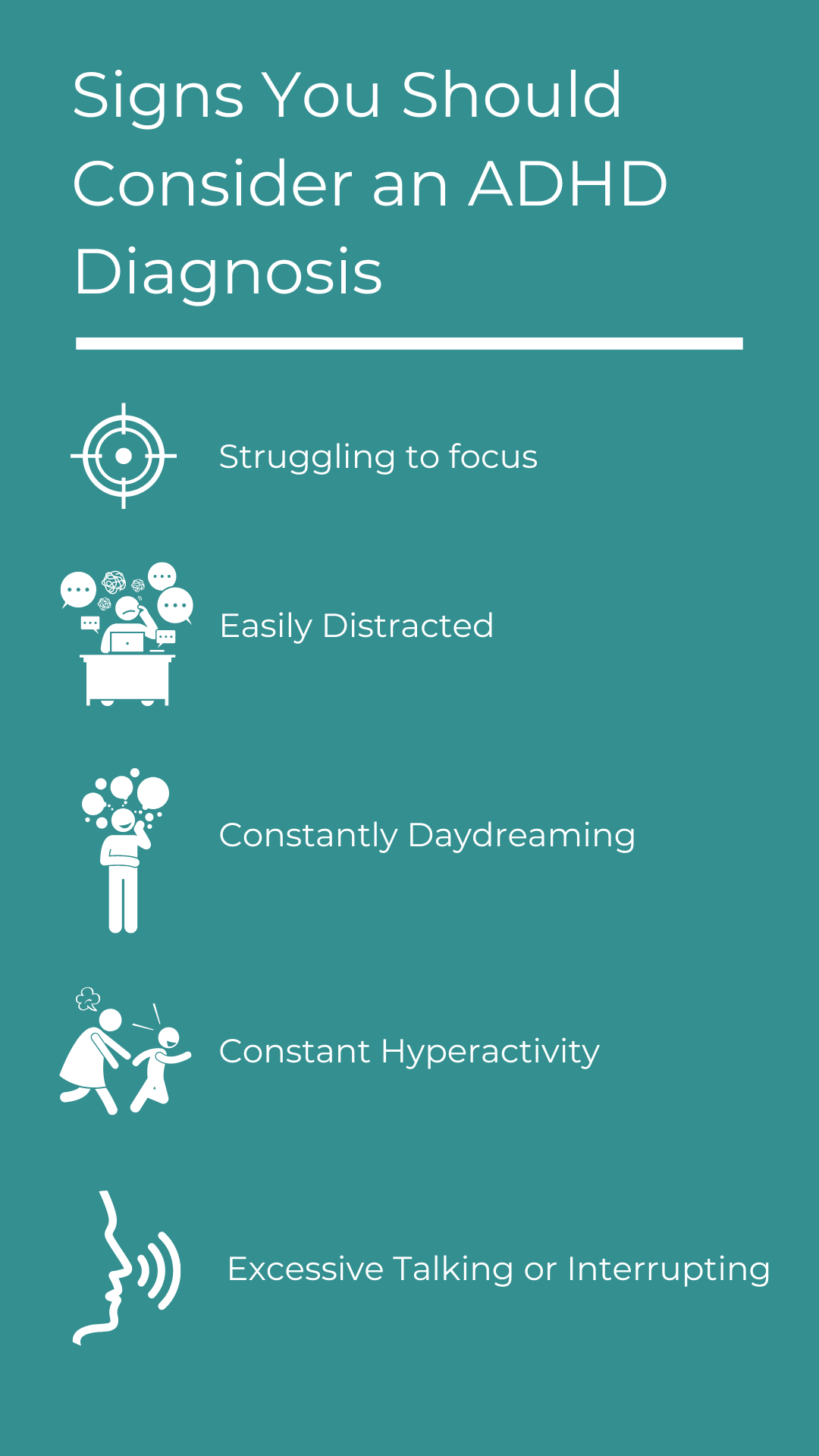
People often seek an ADHD diagnosis in Ontario when long-standing patterns finally start to get in the way of school, work, relationships, or wellbeing. Common signs include:
- Difficulty starting, organising, or finishing tasks, even important ones
- Chronic procrastination, missed deadlines, or trouble managing time
- Losing focus mid-task, or reading a page and retaining nothing
- Restlessness, fidgeting, or feeling "driven by a motor"
- Acting or speaking impulsively, or interrupting others
- Forgetfulness, frequently misplacing things, and mental overwhelm
- A child who is disruptive, "zoned out," or underperforming relative to their ability
- Coping well for years, then hitting a wall as responsibilities increase
Experiencing some of these does not automatically mean you have ADHD; that is exactly what an assessment is designed to determine, one way or the other.
How ADHD is diagnosed: the assessment process
There is no single blood test or brain scan for ADHD. An accurate diagnosis comes from a structured evaluation that gathers information from several sources and measures your symptoms against established criteria. Here is what the ADHD diagnosis process looks like at Cedarway Therapy:
- Free 15-minute consultation. We learn what's prompting the assessment, answer your questions, and match you with the right psychologist. No referral needed.
- Clinical interview & history. Your psychologist explores your current concerns and your developmental, academic, medical, and family history, including signs that were present in childhood, which the DSM-5-TR requires.
- Standardised rating scales. Validated questionnaires (for example, adult self-report scales and, for children, parent and teacher rating forms) measure symptoms across the settings of your life.
- Cognitive & attention testing. Where helpful, testing of attention, memory, and executive functioning adds objective data and helps rule other explanations in or out.
- Differential diagnosis. We carefully consider conditions that can look like ADHD, such as anxiety, depression, sleep problems, trauma, or learning differences, so the conclusion is accurate.
- Feedback & written report. Your psychologist explains the findings in plain language and provides tailored recommendations you can use with your doctor, school, or workplace.
To meet DSM-5-TR criteria, a person generally needs several symptoms (at least six for children up to 16, or five for those 17 and older) that have persisted for at least six months, were present before age 12, appear in two or more settings, and interfere with daily functioning.
What happens after an ADHD diagnosis
A diagnosis is not a label; it's a key that unlocks understanding and options. Once you have clear results, you can decide what support fits your life:
- Therapy and skills: approaches such as cognitive behavioural therapy (CBT) and ADHD coaching help with focus, organisation, time management, and the anxiety or low mood that can accompany ADHD.
- Medication (if you choose it): psychologists don't prescribe, but we can coordinate with your family doctor, nurse practitioner, or psychiatrist so this option is available to you.
- Accommodations: your report can support school IEPs, workplace accommodations, and applications such as the federal Disability Tax Credit.
- Ongoing support: our clinicians offer individual therapy and virtual therapy across Ontario to help you put strategies into practice.
Why choose Cedarway Therapy for your ADHD diagnosis
- Qualified to diagnose: assessments led by registered psychologists who are authorised to diagnose ADHD in Ontario.
- All ages: we assess children, teens, and adults, including adults exploring ADHD for the first time. For younger children, see our child psychologist.
- Evidence-based: we use DSM-5-TR criteria and validated, standardised tools, never guesswork.
- Culturally responsive: our team speaks English, French, Arabic, Urdu, Gujarati, Hindi, and Punjabi, and offers culturally and spiritually sensitive care.
- Flexible access: in person in Oakville or by secure video anywhere in Ontario, with evening and weekend availability.
Whole-person care: assessment, therapy, and coordination of next steps under one roof.
Ready to get answers about ADHD?
Or call (416) 900-8077 · email info@cedarwaytherapy.com
Frequently asked questions about ADHD diagnosis in Ontario
Whenever you're ready, we're here.
Book a free 15-minute call. Tell us a little about what is going on, ask anything, and we will help you find the right clinician.